Commercial Roof Maintenance
Commercial roof maintenance is the scheduled inspection, cleaning and minor repair work that keeps a roof watertight and keeps its warranty valid. It is planned work on a set schedule, not the emergency call you make once water is already coming through the ceiling.
Most commercial roofs do not fail suddenly. They fail slowly, at seams, fasteners, flashings and drains, and the damage is usually visible on the roof for months or years before it appears inside the building. Maintenance is what finds it during that window.
This page sets out what a maintenance program covers, how often a Pennsylvania roof should be inspected, what gets checked, and what it costs you to skip it.
What Does a Commercial Roof Maintenance Program Include?
A proper program covers five things. A walk around the roof with no record of what was found is not one of them.
1. Scheduled inspection and a written condition report
Someone gets on the roof, works through it section by section, and gives you a written record with photographs. That record tells you whether the roof is stable or deteriorating, and it is what a warranty provider will ask to see.
2. Debris removal and drainage clearing
Drains, scuppers and gutters are cleared so water leaves the roof. Standing water is the single biggest accelerator of roof failure, and most ponding starts as a blocked drain rather than a design fault.
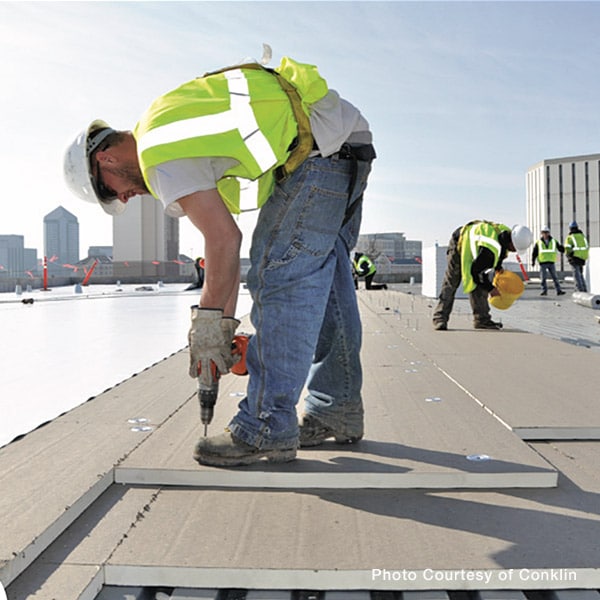
3. Seam, flashing and fastener checks
Seams are probed, flashing is checked where the roof meets walls, curbs and penetrations, and fasteners are checked for backing out, corrosion and failed washers. These are where commercial roofs leak first.
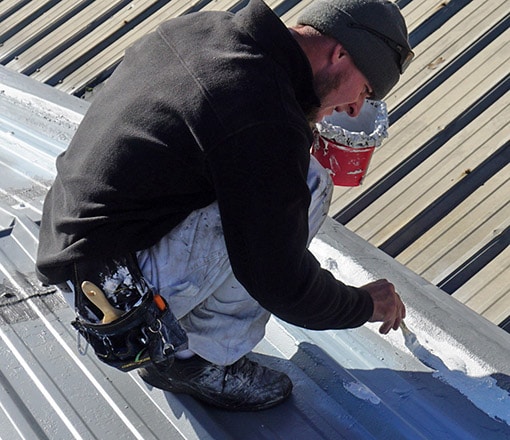
4. Minor repairs carried out on the spot
Small failures are sealed or patched while the crew is already on the roof. A seam repaired during a scheduled visit costs a fraction of the same seam repaired after it has soaked the insulation below it.
5. Documentation for your warranty
Inspection records are filed so that if you ever need to make a claim, you can show the roof was maintained. Most roofing warranties require exactly that.
How Often Should a Commercial Roof Be Inspected in Pennsylvania?
Twice a year, plus after any severe weather event.
The first inspection should follow winter. Pennsylvania winters move above and below freezing repeatedly rather than staying cold, and that freeze and thaw cycle works water into small openings at seams and fasteners, then expands it. An opening that was sound in October can be leaking by March.
The second should follow summer, after months of UV exposure, thermal movement and storm activity.
Add an inspection after hail, high wind or heavy snow load. Storm damage frequently does not leak straight away. It leaks the following season, by which point the connection to the storm is easy to miss and harder to claim for.
The National Roofing Contractors Association recommends the same twice yearly schedule for commercial buildings.
What Gets Checked During a Commercial Roof Inspection?
A thorough inspection covers:
- Seams and laps, probed for separation or lifting
- Fasteners, for backing out, corrosion and failed washers
- Flashing at walls, parapets, curbs and chimneys
- Penetrations: vents, pipes, drains, skylights and equipment mounts
- Drains, scuppers and gutters for blockage
- Any area holding water after rain
- Surface condition: rust, chalking, blistering and coating wear
- Signs of storm, hail or wind damage
- The underside where accessible, checking deck, purlins and insulation for staining or moisture
Commercial Roof Maintenance Tips
Between scheduled visits, five things make a measurable difference:
- Keep drains and gutters clear. Most ponding problems start here, and clearing them is the cheapest maintenance there is.
- Trim back overhanging trees. Branches abrade the surface, and falling limbs puncture it.
- Check after storms. A quick look after hail or high wind catches damage while it is still a repair.
- Fix small failures immediately. A lifted seam is a small job until water reaches the insulation.
- Keep unnecessary foot traffic off the roof. Most accidental damage is caused by people servicing rooftop equipment.
What Happens If You Skip Roof Maintenance?
The costs are not evenly spread. Four of them matter more than the rest.
- Repairs get more expensive. A seam repaired on a scheduled visit is a small job. The same seam found after a winter of freeze and thaw is a larger one.
- The insulation gets wet, and that changes everything. This is the one most building owners do not see coming. Once water is in the insulation, it has to be located and replaced, and a surface repair will not solve it.
- Your cheapest option disappears. A structurally sound roof with dry insulation can usually be restored and coated for a fraction of replacement cost. A roof with saturated insulation cannot. Skipping maintenance is what removes the inexpensive fix from the table.
- Your warranty may no longer apply. Most roofing warranties require documented maintenance. Without the records, a claim can be refused for a fault that would otherwise have been covered.
How Long Should a Commercial Roof Last?
Design life varies by system. These are the ranges commonly quoted in the industry:
- Built-up roofing (BUR): roughly 15 to 30 years
- Modified bitumen: roughly 10 to 20 years
- EPDM: roughly 20 to 30 years
- TPO: roughly 15 to 25 years
- Metal: roughly 30 to 45 years
Those are design lives rather than guarantees. Drainage, installation quality and maintenance decide where in the range a particular roof actually lands, and a neglected roof routinely falls short of the bottom of its range while a maintained one reaches the top of it.
Common Commercial Roof Maintenance Mistakes
- Waiting for a leak. By the time water shows inside, it has usually been getting in for a while.
- Inspecting from the ground. Seams, fasteners and ponding are not visible from below.
- Clearing debris but ignoring drainage. A tidy roof that still holds water has not been maintained.
- Patching without finding the source. Water travels. The wet patch inside is rarely below the entry point.
- Letting the maintenance record lapse. The paperwork is part of the warranty, not admin.
- Coating over an unresolved problem. A coating applied over wet insulation seals the moisture in.
Does Roof Maintenance Keep My Warranty Valid?
Usually it is a condition of it. Most roofing warranties, manufacturer and contractor alike, require documented periodic inspection and maintenance, and commonly exclude damage caused by neglect, unauthorized modifications or lack of regular inspections.
Where a Conklin restoration system is installed, it carries a 20-year non-prorated manufacturer warranty, with the option to renew for a further 20 years, subject to the system installed and its renewal requirements. Lester’s Roofing & Carpentry also provides its own 3-year contractor workmanship warranty.
Keeping the inspection records is what keeps both of those available to you.
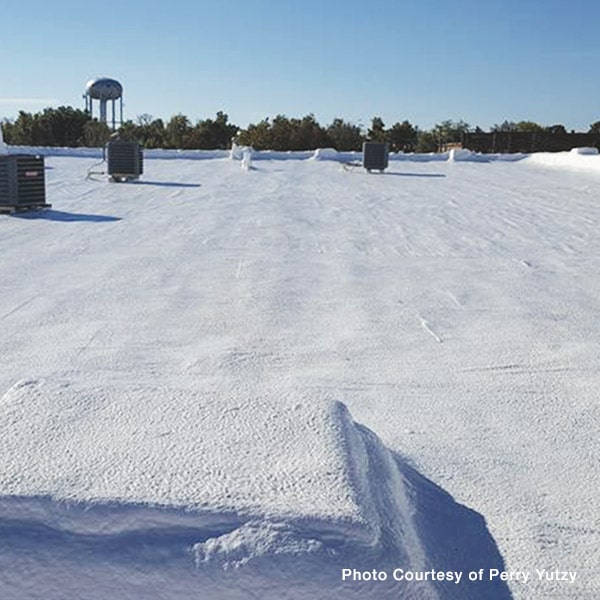
Extending Roof Life with a Conklin Restoration System
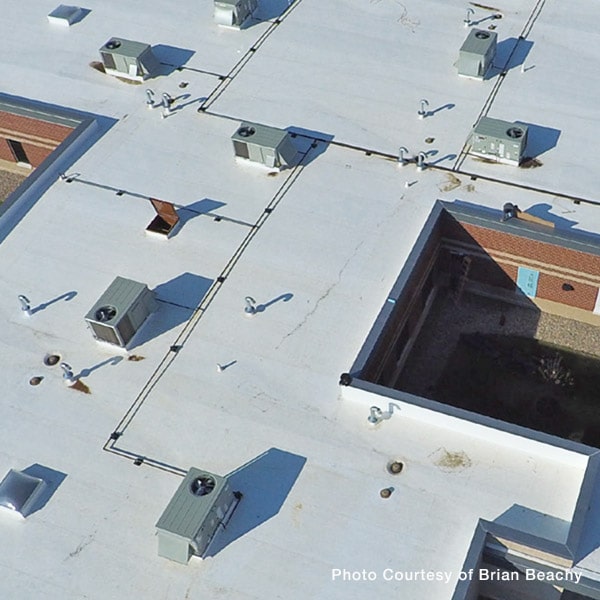
Even a well maintained commercial roof ages. Where the structure is sound and the insulation is dry, a restoration system is usually the cost-effective alternative to replacement.
The Conklin Roofing System uses elastomeric coatings to create a durable, white reflective, waterproof barrier over the existing roof. The coatings resist dirt and discoloration, need only annual cleaning as maintenance, and can be recoated at the end of their service life rather than torn off.
The system carries built-in EnergyStar cool roof technology, which can lower cooling costs by up to 30%. Tax credits, utility rebates and other incentives may also apply.
Licensed Commercial Roofing Contractor in Pennsylvania
Lester’s Roofing & Carpentry is a certified Conklin Roofing Systems contractor based in Rossiter, Indiana County, with over 16 years of experience on commercial, industrial and agricultural buildings.
We are registered as a Home Improvement Contractor. You can check HIC #PA042939 on the Attorney General’s website.
Our services cover roof maintenance, inspections, leak repairs, metal roof repair and restoration, across roofing systems including EPDM, BUR, modified bitumen, CSPE, PVC, TPO and metal.
Free Commercial Roof Inspections in Pennsylvania
Lester’s Roofing & Carpentry provides FREE roof inspections for agricultural, commercial and industrial facilities in Johnstown, Altoona, Clearfield, Phillipsburg, Greensburg and surrounding communities in Pennsylvania.
If it has been more than a year since your roof was last inspected, or you have had a storm since, that is the point to book one.
Call Lester’s Roofing & Carpentry at 814-952-2469 to arrange a free commercial roof inspection.