
Commercial Roofing Contractors in Altoona, PA
Lester’s Roofing & Carpentry works on commercial, industrial and agricultural roofs in Altoona and across Blair County. Restoration coatings, leak tracing and repair, metal roof work, flat roof repair and full replacement. We handle residential roofing here as well.
We are based in Rossiter, Indiana County, and we have been roofing in this part of Pennsylvania for over 16 years. We are a certified Conklin Roofing Systems contractor and a registered Pennsylvania Home Improvement Contractor, HIC #PA042939.
Call 814-952-2469 for a free roof inspection in Altoona.
Commercial Roofing Services in Altoona
- Roof restoration and coatings. Renewing a sound roof in place instead of tearing it off, where the deck and insulation allow it. On a large building this is usually the decision worth examining first.
- Commercial roof leak repair. Tracing water back to the actual entry point, which on a low-slope roof is often nowhere near the stain in the ceiling.
- Flat and low-slope roofing. EPDM, TPO and modified bitumen, with the penetration, curb and perimeter details around them.
- Metal roof repair and coating. Fasteners, seams, ridge and flashing work on industrial, agricultural and commercial buildings.
- Commercial roof replacement. For when restoration is not the right answer, and we will say so when it is not.
- Roof maintenance programs. Scheduled inspections, drain clearing and minor repairs, with the written records a warranty needs.
- Residential roofing. Repairs, shingle work and metal roof installation on homes.
- Free roof inspections. On any building type.
Altoona Weathers Differently to the Mountain Towns
Altoona sits at the eastern foot of the Allegheny Front, in the Logan Valley, and that position does something specific to the weather here.
Air moving in from the west has to climb the Front. Climbing air cools, and cooling air drops its moisture, which is why towns on the western slope such as Portage and Cresson reliably get more snow than places only a short drive away. By the time that air crests the ridge and descends into Altoona it is drier and warming again.
So Altoona gets noticeably less snow than Cambria and Somerset County at the same latitude. Building owners here reasonably conclude their roofs have an easier life than the ones up the mountain.
That conclusion is wrong, and it is worth understanding why.
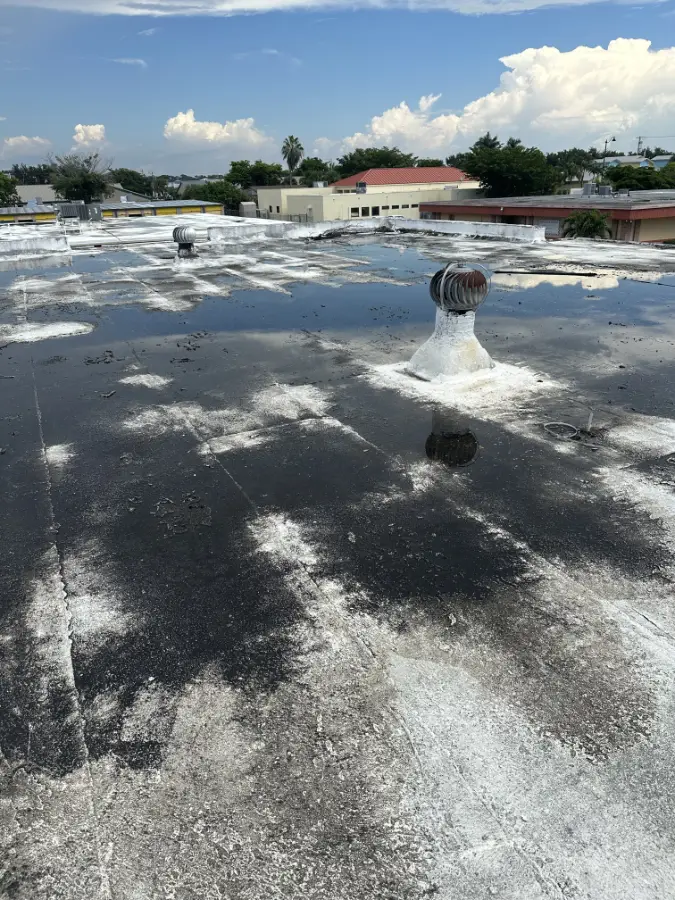
What wears a roof out is not cold. It is crossing the freezing point.
A roof buried under snow at twenty degrees is, oddly, in a stable condition. Everything on it is frozen solid and nothing is moving. It stays that way for weeks at a time on the high plateau.
Altoona does not do that. A milder, drier winter at lower elevation means temperatures that sit close to freezing rather than well below it, thawing by day and refreezing by night. Every one of those cycles is water working into a seam, a lap or a fastener hole, freezing, expanding, widening the opening slightly, then thawing and doing it again.
The practical result is that a lower-elevation town in the lee of the mountain can put a roof through more freeze and thaw cycles in a winter than a colder, snowier town on the other side of the ridge. Less snow on the roof, more work being done on the roof.
It is why we would rather look at an Altoona roof in fall than in spring. A seam that has been opened and closed thirty times between November and March is a different repair from the one it was in October.
A Railroad City’s Building Stock
Altoona exists because of the Pennsylvania Railroad, and the building stock still shows it. The Altoona Works were among the largest railroad shops anywhere, and what that left behind is industrial space on a scale nothing else in Blair, Cambria or Indiana County comes close to: long shop buildings, warehouses, freight and storage structures, and the later industrial parks built around them.
Alongside that is a genuine commercial core. Medical and institutional buildings, retail, offices, distribution space. Altoona is the largest commercial market we work in apart from Pittsburgh.
Two things follow for roofing.
Scale changes the decision. On a roof measured in tens of thousands of square feet, the gap between restoring and replacing is not a few thousand dollars, it is a capital decision that goes to a board. A tear-off on a building that size also means disposal, haulage, and sections of the building open to the weather while the work runs. Where the deck and structure are sound and the insulation is dry, a restoration is applied over an intact roof, which removes all three of those problems.
Older industrial roofs hide their history. On buildings that have been there for decades, you are rarely looking at one roof. You are looking at an original system with additions, patches, re-covers and equipment added over fifty years, and the failures are usually at the joins between those eras rather than in the middle of any one of them.
Roofing a Building That Cannot Close
Most of the commercial roofs we are asked about in Altoona are on buildings that have to keep operating. A medical building, a retail unit, a distribution warehouse and a manufacturing floor all have the same constraint: the roof work cannot stop the business underneath it.
This is the practical argument for restoration over replacement on an occupied building, and it is worth being precise about.
A restoration happens on top of a roof that is still doing its job. The failed details are repaired and reflashed, the surface is cleaned and prepared, and the coating goes on. The building is never open. There is no tear-off, no dumpster in the parking lot, and no day where a forecast change threatens your stock or your equipment.
A replacement genuinely does open the building, and the honest version is that it is managed rather than avoided. The roof comes off in sections small enough to be made watertight again the same day, which means the job takes longer and costs more than the square footage alone suggests. Anyone quoting you a full tear-off on an occupied building without discussing how it will be phased has not thought about your side of it.
We will tell you which of the two your roof actually needs. If the insulation is saturated or the deck has gone, coating over it hides a problem rather than solving one, and we would rather lose the job than do that.
Recent Work: A Condo Roof in Altoona
A worked example of everything above, on a building that could not close for a day.
The client was the board of a multi-storey residential condominium in Altoona. Occupied throughout, low-slope roof sections at several levels, and a decision that had to be justified to owners out of a reserve budget rather than signed off by one person.
What we found
The field of the roof was weathered but sound. Fastener plates were telegraphing through the surface and the seams were visible, which is what an aging membrane looks like rather than a failing one.
The problems were all at the edges. Previous patch repairs along the parapet had been made with bitumen mastic laid on heavily, and it had blistered and lifted, which is what that material does once it has been through enough summers. The same treatment had been worked around the roof drains. Every one of those repairs was a place where water could get in behind the patch rather than be kept out by it.
This is the pattern we describe further up the page, and it is the common one. The membrane in the middle of the roof was not what needed replacing.

Earlier mastic patching along the parapet, blistered and lifting.

A drain at the parapet, with the same patching worked around it.

The field of the roof: weathered, with fastener plates showing through.
What we did
A restoration rather than a coating, and the difference matters.
The failed details were repaired and reflashed first. The old mastic came off, the parapet junctions and the drain surrounds were rebuilt properly, and only then was the whole surface cleaned and prepared. The coating system went on over a roof that had been made sound, as a seamless surface with no laps left to fail.
Putting a coating straight over blistered patching would have buried the problem for a couple of years and cost the association the price of doing it twice. We say that elsewhere on this page and we meant it here.
The building stayed occupied and weathertight for the whole job. No tear-off, no open deck, no skip in the parking area, and nothing that required residents to move out or around.
The result
A restored roof under warranty. Where a Conklin restoration system is suitable, it carries a 20-year non-prorated manufacturer warranty, with the option to renew for a further 20 years, subject to the system installed and its renewal requirements. Lester’s Roofing & Carpentry also provides its own 3-year contractor workmanship warranty.
For a board planning reserve contributions over decades, that horizon is usually the deciding factor rather than the quoted price.

After: the restored roof under its finished coating.
Condominium and HOA Roofing
Roofs owned by an association work differently from roofs owned by a company, and most roofing contractors write as though the two are the same.
A board is spending other people’s money, usually out of a reserve fund, and has to be able to explain the decision at a meeting. That changes what is useful from a contractor. A written report with photographs matters more, because it gets circulated. The expected service life matters more than the quoted price, because reserve planning runs in decades. And the disruption question is not theoretical, because the people living under the roof are the people voting on the work.
We are used to working that way: an inspection documented well enough to put in front of a board, a straight answer on restoration versus replacement, and a schedule built around residents rather than around us.
Metal Roofing in Altoona
Metal covers a lot of ground here, from farm and industrial buildings out toward Sinking Valley and Martinsburg to standing seam on homes in the city.
On existing exposed-fastener metal, the failure is almost never the panels. It is the screws. The rubber washers harden and shrink through years of heat and cold until they stop sealing, while the panels expand and contract and work the fasteners loose. Several leaks appearing across one or two seasons is the signature of a fastener problem rather than a worn-out roof, and it is usually repairable and coatable rather than a replacement.
Rust is the other thing we check, and the distinction that matters is surface rust versus rust that has gone through the panel. A coating will bridge a pinhole. It will not rebuild metal that is no longer there.
More on our metal roof repair and metal roof coatings pages.
Buildings We Work On
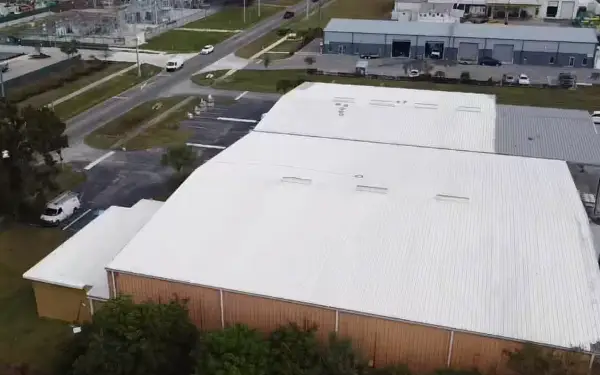
- Industrial and manufacturing facilities
- Warehouses and distribution buildings
- Commercial buildings: offices, retail, medical, churches
- Condominium and apartment buildings, and HOA-owned property
- Farm buildings, barns and workshops
- Homes
Areas We Serve Around Altoona
We cover Altoona and Blair County, including Hollidaysburg, Duncansville, Bellwood, Tyrone, Roaring Spring, Martinsburg, Williamsburg, Claysburg, Newry, Juniata, Lakemont and Logan Township. Altoona is at the eastern edge of our service area, and we work west from here through Cresson and Gallitzin into Johnstown and Cambria County, and north into Clearfield County.
Free Roof Inspections in Altoona
We provide free roof inspections on commercial buildings, industrial units, warehouses, farm buildings and homes throughout Altoona and Blair County.
On a low-slope commercial roof the inspection covers the membrane, every penetration and curb, the perimeter and edge details, the drains, and the condition of the insulation underneath. You get a written report with photographs and a price based on what we found, including a straight answer on whether the roof needs replacing or can be restored.
If you are putting a roof into next year’s budget, an inspection is what turns a guess into a number.
Call 814-952-2469 or get in touch.
Your Local Altoona Roofing Company
Call us for an obligation free quote
5 Star Google Reviews





Altoona Commercial Roofing FAQs
Should I replace my commercial roof or restore it?
It comes down to what is underneath. Where the deck and structure are sound and the insulation is dry, a restoration is usually the better answer on a large building, because there is no tear-off, no disposal, and no period where the building is open. Where the insulation is saturated or the deck has deteriorated, coating over it traps the problem and you are paying twice. An inspection is what settles it, and the answer should come with photographs rather than an opinion.
Can the work be done while we stay open?
For a restoration, yes. It is applied over an intact roof, so the building stays weathertight the whole time and your operations underneath are largely unaffected. A replacement is more disruptive by nature, but it is phased: the roof comes off in sections small enough to be closed up again the same day. That gets planned around your hours and the forecast rather than imposed on them.
What warranty comes with a Conklin restoration?
Where a Conklin restoration system is suitable, it carries a 20-year non-prorated manufacturer warranty, with the option to renew for a further 20 years, subject to the system installed and its renewal requirements. Lester’s Roofing & Carpentry also provides its own 3-year contractor workmanship warranty. Warranties of that length depend on the roof being inspected and maintained, so the maintenance records matter as much as the paperwork at installation.
We get less snow than Johnstown. Does that mean less roof trouble?
Not necessarily, and this catches people out. Altoona sits in the lee of the Allegheny Front and does get less snow than the towns on the western slope. But roof damage tracks freeze and thaw cycles rather than snowfall totals, and a milder winter that hovers around freezing produces more of those cycles than a colder one that stays below it. Less snow on your roof does not mean less work being done on your seams and flashings.
Our building leaks in several places at once. Is the whole roof finished?
Not always, and on metal it usually means the opposite. Several leaks appearing across one or two seasons is the classic signature of fasteners reaching the end of their life rather than panels that have failed, and that is a repair and coating job. On a low-slope roof the same pattern more often points to the details, the penetrations, curbs and perimeter, rather than the membrane in the field.
When is the best time to have a roof looked at in Altoona?
Fall, before the freeze and thaw season starts, and again in spring to see what it did. Coatings also need surface temperatures above a minimum to cure properly, so the application window runs roughly spring through late fall. Booking an inspection early in the year gives you time to plan the work rather than discovering in November that it has to wait.