Roofing work can be a significant investment, so it’s natural to want to avoid paying more than you need to. Correctly identifying whether roof repairs should be expensed or capitalized plays an important role in managing costs, planning ahead, and understanding how roofing decisions affect the building as a long-term asset.
For many property owners, the confusion comes from the fact that roof repairs don’t always fit neatly into one category. Some projects are clearly maintenance. Others are clearly capital improvements. Many sit somewhere in between, and that’s where scope, outcomes, and documentation matter most. Where there is uncertainty, your accountant is the best person to determine which treatment is appropriate for your specific circumstances. That said, understanding the basics can help you ask the right questions and see how each option may affect your finances.
Capital improvements, expensing, and capitalising explained
In general terms, a capital improvement is work that adds value to a building, improves its performance, or extends its useful life. Costs associated with capital improvements are typically capitalized, meaning they are recorded as part of the building asset and recovered over time. Expensing, by contrast, involves treating costs as current-period expenses, usually because the work maintains the asset rather than improving it. Whether roofing work is expensed or capitalized depends on what the work achieves, not simply what it costs or how it’s described.
What makes a roof repair a capital improvement?
A roof repair is typically considered a capital improvement when the work goes beyond restoring the roof to its previous condition and instead improves the building asset in a meaningful way.
In practical terms, roof repairs are more likely to be treated as capital expenditure or capital works when they:
- Extend the roof’s useful life beyond its original expectation
- Improve the roof’s performance, durability, or overall condition
- Upgrade the roofing system rather than simply fixing isolated damage
- Address widespread deterioration instead of localized failure
This is why people often ask whether roof repair should be capitalized. The key factor isn’t what the work is called, or even how much it costs. It’s whether the work changes the long-term value or function of the roof as part of the building.
By contrast, repairs that simply restore the roof to working order, such as fixing a specific leak or replacing limited damaged sections, are more commonly treated as operating expenses rather than capital improvements.
Roof repair vs capital improvement in practical terms
The difference between a roof repair and a capital improvement often becomes clearer when viewed through outcomes rather than labels.
A repair is generally intended to address a specific issue and restore the roof to its prior condition. It corrects damage, stops leaks, or resolves failure without changing how the roof performs overall or how long it is expected to last.
A capital improvement, on the other hand, changes the long-term picture. It improves the roofing system in a way that increases durability, extends service life, or enhances performance beyond the original baseline.
In practical roofing terms, the distinction often looks like this:
- Repair work focuses on fixing isolated problems without altering the system as a whole
- Capital improvement work addresses broader deterioration or upgrades the roofing system
- Repairs maintain expected lifespan, while capital improvements extend it
For example, repairing a small leak, replacing damaged flashing, or resealing limited sections of a roof membrane are typically considered repairs because they restore function without changing the roof’s overall performance or expected lifespan. These types of projects are often expensed.
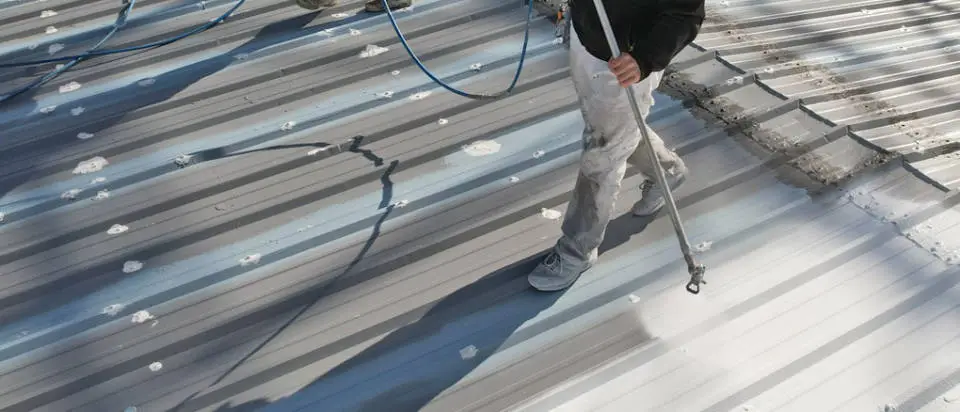
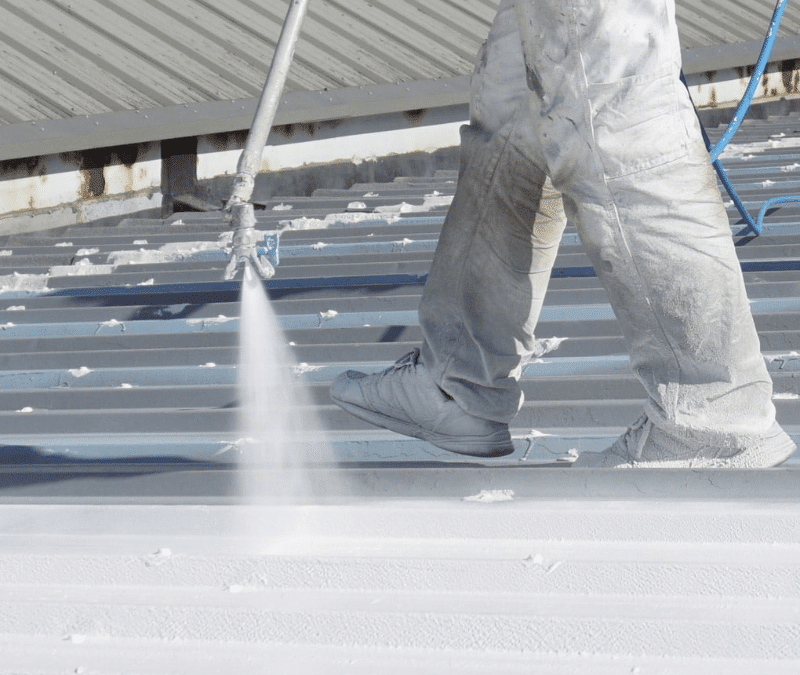
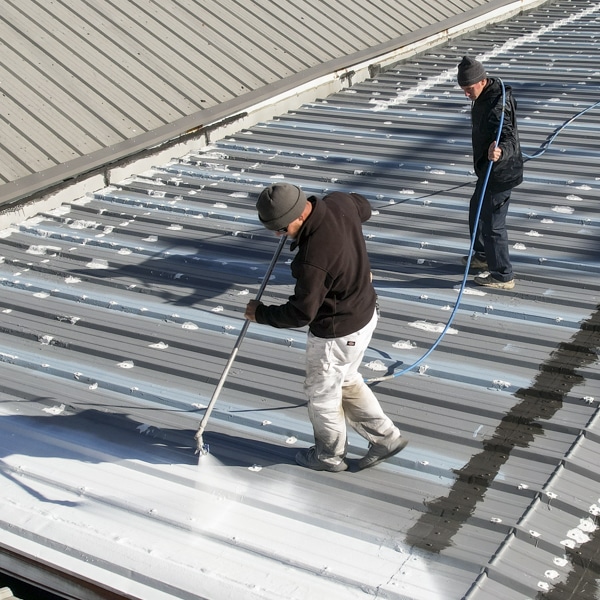
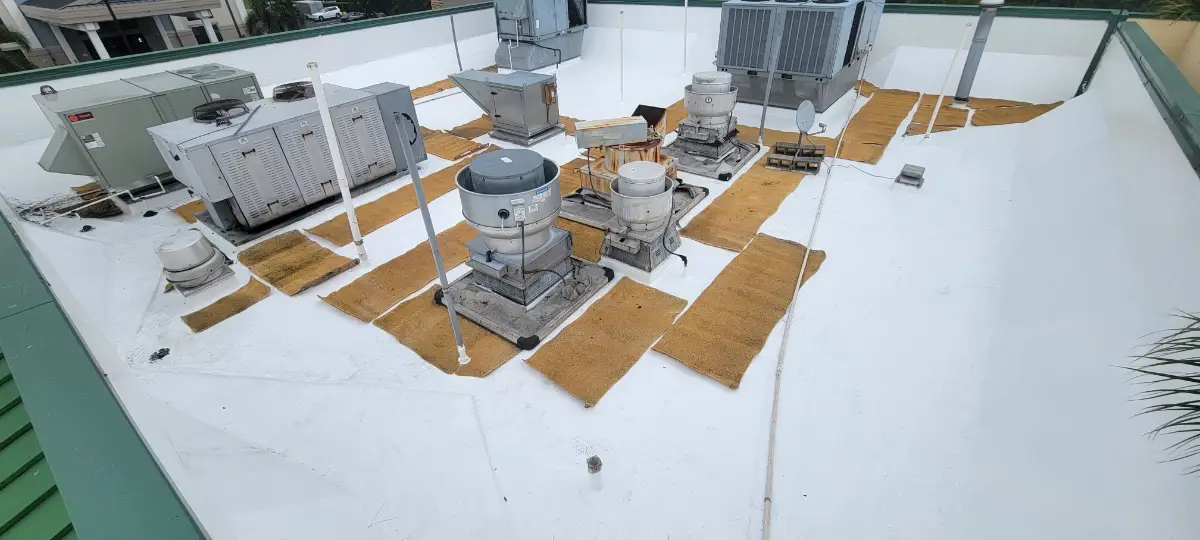
By contrast, work that addresses widespread deterioration or significantly improves the roofing system may be treated as a capital improvement. This can include installing a roof coating or restoration system when it is designed to extend the roof’s service life by several years, improve weather resistance, and delay full replacement. In those cases, the coating is not simply a protective layer but part of a broader system upgrade, which is why it may be capitalized rather than expensed.
That said, if an existing coating is patched, or a roof is re-coated to replace an existing coating, the classification can become less clear. If the coating is old, re-coating is more likely to be considered an improvement, as most of the value from the previous coating, such as an extended lifespan, will already have been realized. However, if the coating is relatively new and needs to be redone due to storm damage, re-coating is more likely to be considered a repair.
This is why roof repair and capital improvement questions can’t be answered purely by looking at invoices. Two projects may involve similar materials or labour but lead to very different accounting outcomes depending on whether the work simply restores function or meaningfully improves the asset.
Understanding this difference also helps explain why some roof repairs are treated as an expense, while others are classified as a fixed asset and capitalized over time.
Below are some examples of questions we often hear from clients trying to navigate these grey areas.
Is a roof a structural repair?
Roofs are generally considered part of a building’s structure, but that doesn’t mean every roof repair is a structural repair.
Structural roof repairs usually involve work to components that support loads or contribute directly to the building’s structural integrity. This can include repairs to decking, framing, or other elements that affect how the building carries weight or resists stress.
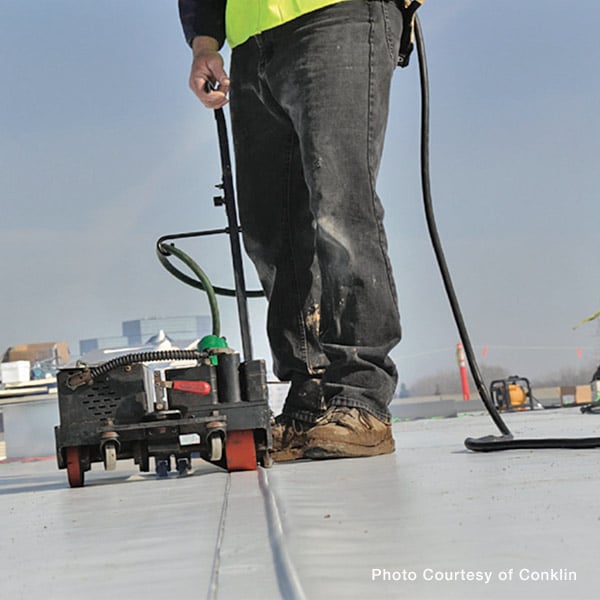
Many common roofing projects do not fall into this category. Membrane repairs, seam reinforcement, flashing repairs, and coating applications typically address weatherproofing and performance rather than structural function.
This distinction matters because structural repairs are more likely to be associated with capital improvements, while non-structural roof repairs are often treated as maintenance. Asking whether roof repair is structural isn’t really about where the work happens. It’s about what the work changes.
When roof repairs restore protective function without altering the underlying structure, they are usually considered non-structural in nature, even though they play a critical role in protecting the building itself.
Is restoring a roof different from replacing it?
Yes, and the difference is central to how roof work is commonly classified.
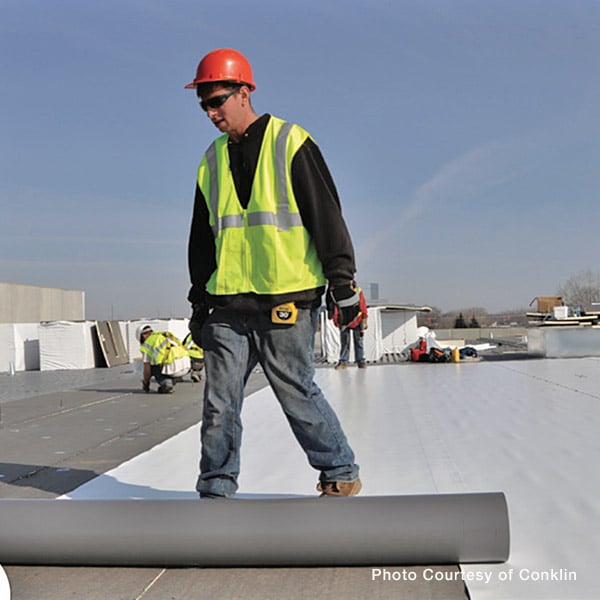
A roof replacement involves removing the existing roofing system and installing a new one. Because it results in a new asset with a new expected lifespan, replacement work is almost always treated as a capital improvement and recorded as part of the building’s fixed assets.
Roof restoration works differently. Rather than removing the entire system, restoration focuses on repairing, reinforcing, and upgrading the existing roof so it can continue performing for longer. This may include targeted repairs, reinforcement of vulnerable areas, and system-wide treatments designed to improve durability and weather resistance.
From an accounting perspective, restoration often sits between a simple repair and a full replacement. It does not create a brand-new roof, but it can materially extend the roof’s useful life and delay replacement. That positioning is why restoration projects sometimes raise questions about whether they should be expensed or capitalized, and why the specific scope of work matters so much.
How coatings and restoration systems fit into classification
Roof coatings and restoration systems are one of the most common sources of confusion when it comes to classification.
In some cases, a coating is applied as a limited protective measure, such as sealing specific areas or addressing minor weathering. When used this way, the coating may function more like a repair and be treated accordingly.
In other cases, coatings are installed as part of a planned restoration system. These systems are designed to improve overall roof performance, increase resistance to weather and UV exposure, and extend service life by a defined number of years. When a coating forms part of a broader system upgrade rather than a short-term fix, it may be treated as a capital improvement.
Sometimes, a new coating is repairing or replacing an existing, aged coating, which extends the life of the roof beyond the extension already provided by the old coating. At other times, the new coating is repairing damage to a relatively new existing coating and therefore does not extend the roof’s life much beyond what was already expected.
These distinctions are why documentation is so important. Clearly defining whether a coating is being applied as maintenance or as part of a life-extending restoration system helps decision-makers assess whether the work is maintaining the asset or improving it in a meaningful way.
Why extending roof life affects classification
One of the most important factors in how roof work is classified is whether it extends the roof’s useful life.
Work that simply keeps the roof operating as originally intended is generally viewed as maintenance. Work that adds years of service life, improves long-term performance, or delays the need for full replacement changes how the roof functions as an asset.
From a practical standpoint, extending roof life often involves more than isolated repairs. It may include system-wide upgrades, reinforcement of vulnerable areas, or restoration measures that reset maintenance expectations for the years ahead.
Because of this, projects that demonstrably extend roof life are more likely to be treated as capitalized costs than short-term fixes. The key issue is not whether the roof was already in use, but whether the work alters the timeline and value of the asset going forward.
Why scope of work matters more than cost alone
It’s common to assume that higher-cost roofing projects should be capitalized and lower-cost projects should be expensed. In reality, cost on its own is a poor indicator.
Two roofing projects with similar price tags can have very different outcomes. One may address a specific problem without changing the roof’s overall condition. The other may upgrade the system, improve performance, and extend service life.
What matters most is what the work achieves. Clear scopes of work help show whether a project restores existing function or improves the asset in a lasting way.
For property owners, this is why inspections, system assessments, and detailed documentation matter. When the scope clearly reflects the condition of the roof before and after the work, it becomes much easier for advisors to assess whether roof repair should be treated as an expense or a capital improvement.
Putting roof repairs into the right category
Whether roof repair is treated as a capital improvement or an expense depends on what the work actually does. Repairs that restore function and address isolated issues are typically treated differently from projects that improve performance, extend service life, or upgrade the roofing system as a whole.
Understanding this distinction starts with scope. Clear assessments, well-defined scopes of work, and proper documentation make it easier to see whether a project is maintaining an asset or improving it in a lasting way.
For property owners planning roof repairs, restoration, or coating systems, clarity upfront supports better budgeting, smoother discussions with advisors, and more confident long-term decisions. The goal isn’t to force work into a category, but to understand where it naturally fits based on outcomes.
Once you have that sorted, the next step is to understand how your roof repairs project might impact on your tax return. This article should help you understand whether the cost of your roof repairs is tax deductible or depreciable. We can also conduct a free roof inspection to help you understand the scope of work required to resolve your roof’s challenges.