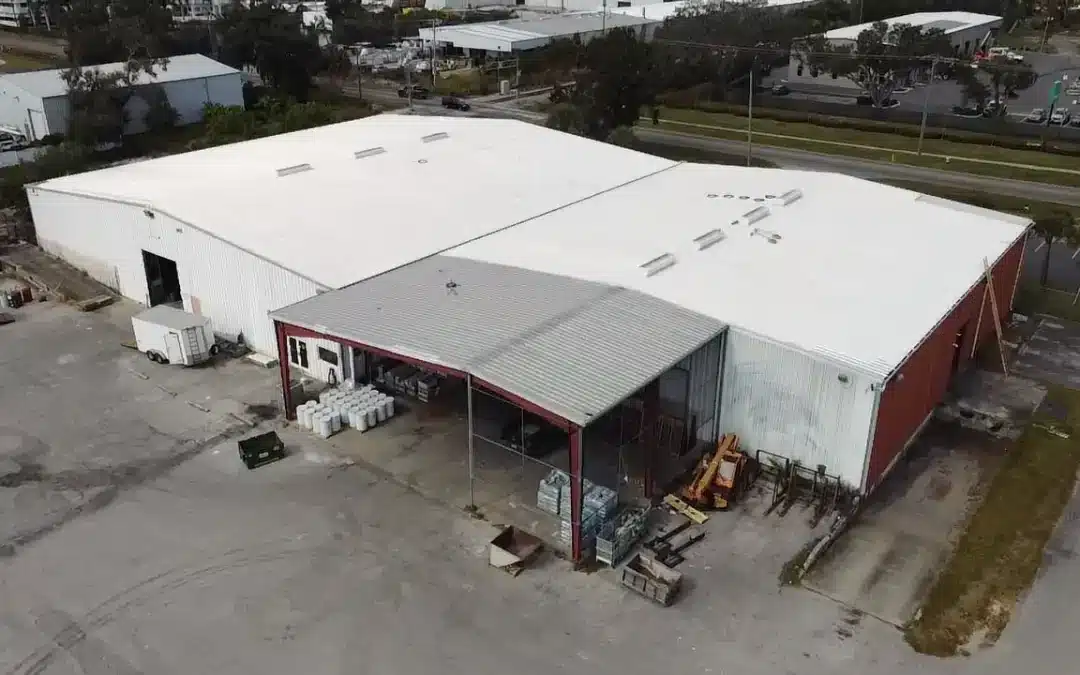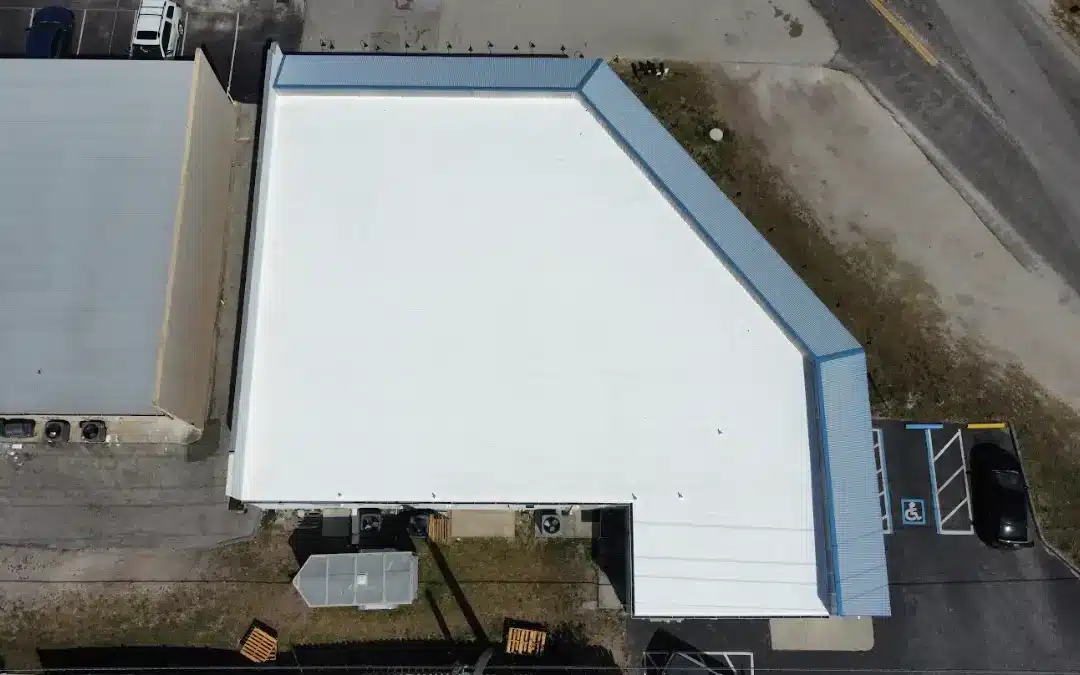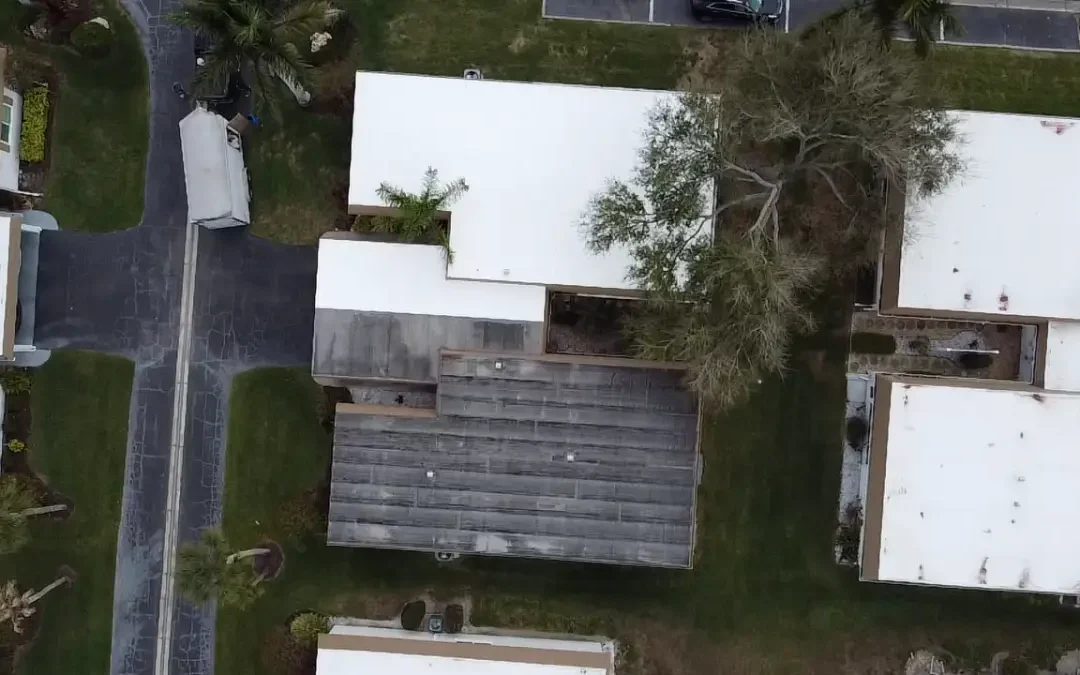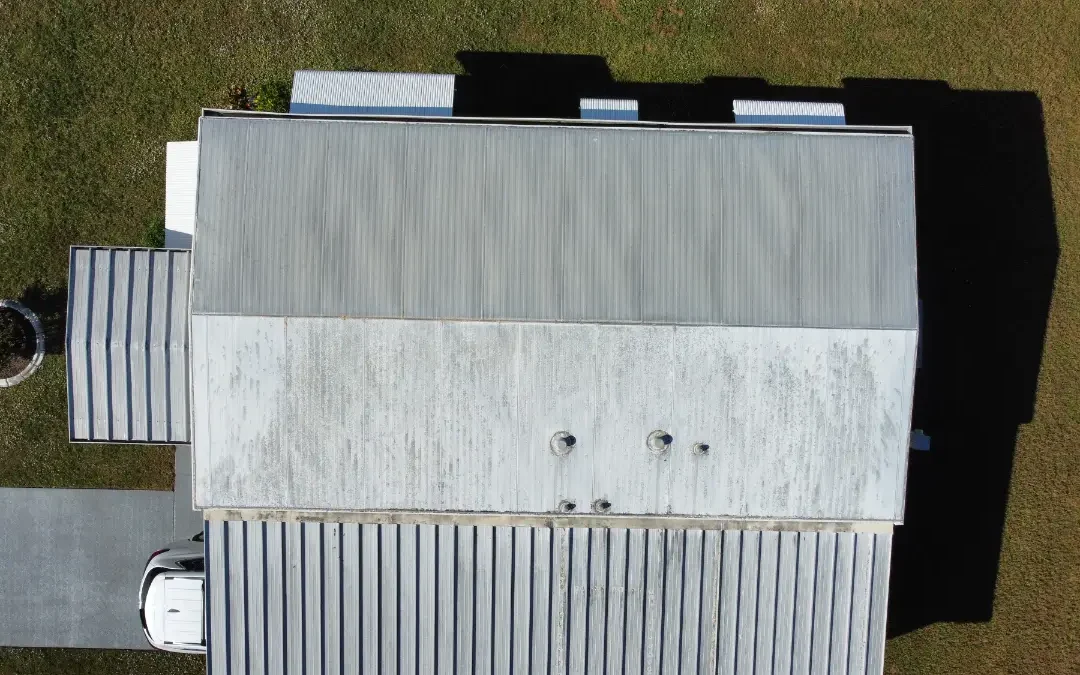
Pennsylvania winters are hard on commercial roofs. Heavy snow, freezing rain, ice buildup, and repeated freeze-thaw cycles can expose weak seams and flaws in flashing, drains, and low-slope roofing systems, often leading to leaks during or after snow melt.
If your building is taking on water, the priority is to protect people, limit interior damage, and get the roof assessed quickly. Whether you manage a warehouse, shop, farm building, office, or industrial facility, a fast response can help reduce repair costs and prevent a small leak from becoming a larger structural problem.
Why commercial roofs start leaking after snow
Before we dive into the steps to take when you’ve detected a leak, it’s important to understand why commercial roofs often start leaking after snowfall, so you can better recognise the warning signs, explain the issue clearly to a roofing contractor, and understand what may be happening within the roofing system. With that in mind, winter roof leaks usually happen when snow and freezing conditions expose vulnerabilities that may not show up during warmer months. In many cases, the leak itself is only the visible symptom. The underlying problem often starts with trapped moisture, blocked drainage, aging seams, or winter expansion and contraction within the roofing system.
Ice dams and backed-up meltwater
Ice dams are often associated with residential roofs, but the same basic issue can affect any roof edge or transition where melting water cannot drain away properly. As snow melts and refreezes, water can back up under roofing materials or push into vulnerable joints. On buildings with mixed rooflines or edge details, this can create leak paths that only appear during winter weather.
Freeze-thaw damage
Water expands when it freezes. If moisture has already worked into small cracks, loose seams, or flashing gaps, repeated freeze-thaw cycles can widen those openings and let more water into the roofing system. That is one reason a roof can seem fine in fall and start leaking after the first serious winter event.
Heavy snow accumulation
A commercial roof can also struggle under the weight of heavy snow, especially if it already has weak areas, drainage problems, or aging materials. This is one reason prompt assessment matters after a major storm, particularly on older or low-slope roofs.
Blocked drainage systems
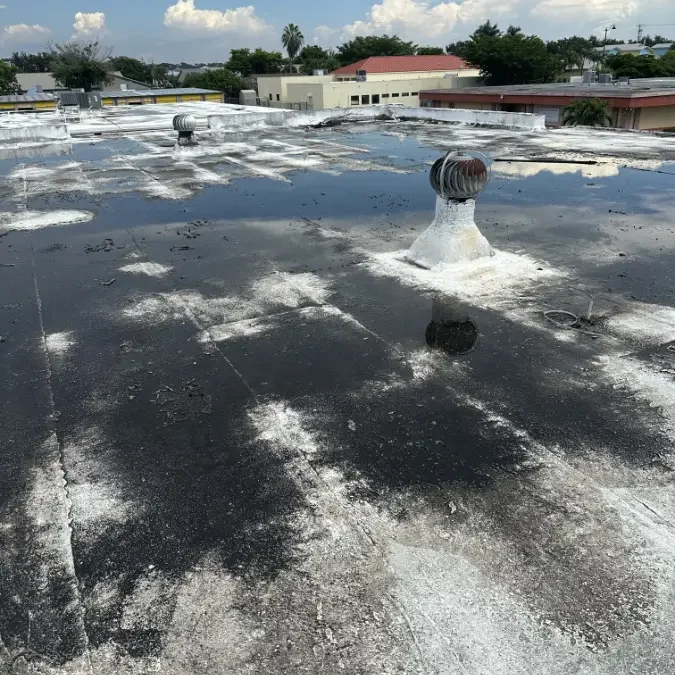
On many commercial buildings, drainage is the real problem. Snow, ice, and debris can block drains, gutters, scuppers, and downspouts, which slows runoff and leaves water sitting on the roof longer than it should. That standing water increases the chance of leaks around seams, penetrations, and roof edges.
Damaged flashing and seams
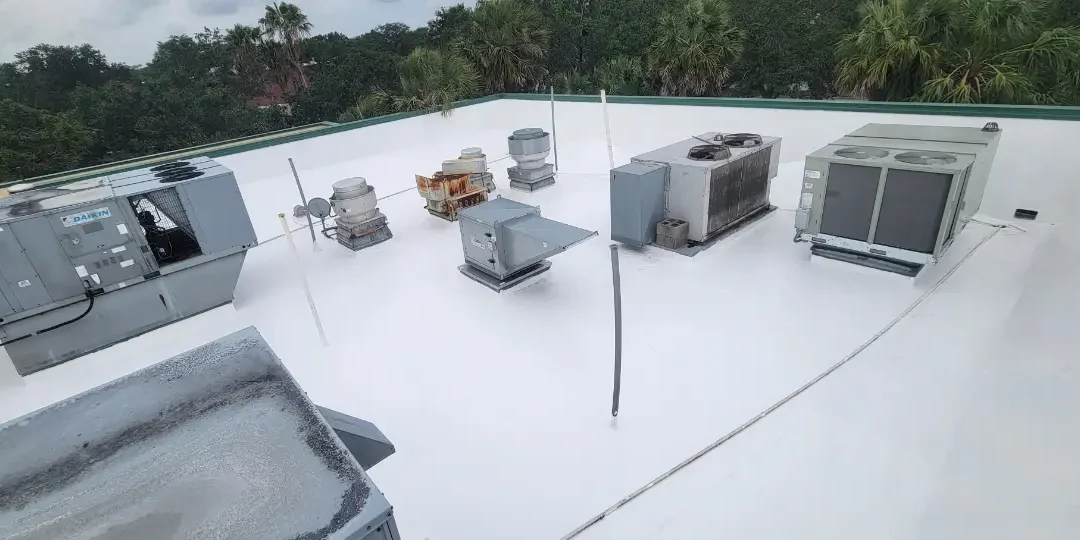
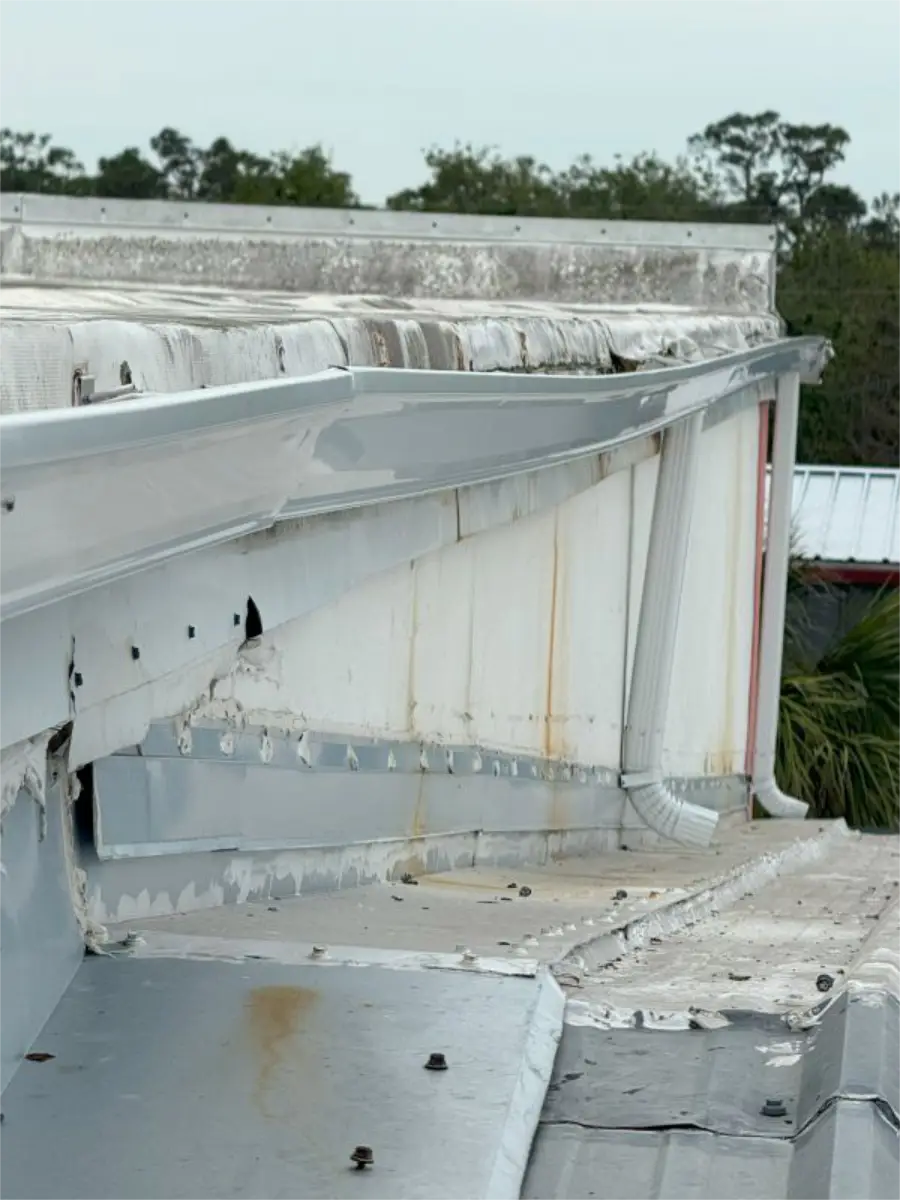
Flashing around vents, roof edges, skylights, HVAC units, and wall transitions can crack, shift, or separate over time. The same is true of membrane seams on many commercial roofing systems. Once winter weather adds ice and trapped moisture to the mix, those areas often become the first points of water intrusion.
Signs your roof may have winter damage
As you can probably now appreciate, if you’ve discovered one roof leak, there’s a good chance you may actually have more than one leak. Not every winter roof problem starts with water pouring from the ceiling. In many buildings, moisture travels through insulation, decking, and structural components before it becomes visible indoors.
So, before you start trying to fix the issue, it’s important to check your whole property for signs of roof damage, especially the less obvious signs, so you can be sure you’re addressing the entire problem.
Common warning signs include:
- Water stains on ceilings or walls
- Sagging ceiling tiles
- Bubbling paint
- Damp insulation
- Mold or musty smells
- Dripping that appears during warmer parts of the day
- Water near rooftop penetrations or mechanical units
- Visible ponding or slow drainage after snow begins to melt
These signs are worth taking seriously even if the leak looks minor. Water that reaches the interior has often already moved through parts of the roof assembly you cannot see.
What to do if your roof is leaking after snow
Once you’ve identified all areas of your building that are exhibiting signs of a winter leak, the next step is to protect your property, avoid making the problem worse, and arrange a professional inspection as quickly as possible. Here’s a straight forward guide to doing just that.
Protect people and property
Start inside the building.
Move equipment, stock, furniture, and electronics away from the leak if you can do so safely. Place buckets or containers under active drips, use towels or tarps to contain water spread, and keep staff and visitors clear of slippery surfaces.
If water is moving near lights, outlets, or electrical equipment, isolate the area and treat it as a safety issue first.
Avoid dangerous DIY roof access
Avoid climbing onto the roof yourself. Snow-covered and icy roofs can be extremely dangerous, especially on low-slope commercial systems where slick surfaces, hidden weak spots, and blocked drainage are harder to see.
Winter weather can also hide skylights, soft spots, edge conditions, and collapse risks. Even a roof that looks accessible from the ground may not be safe to walk.
A rushed repair attempt can make the problem worse, so it really isn’t worth it to jump on the roof and try to patch it yourself. Instead, if you can safely view the roof through a drone feed or roof access hatch, without actually getting on the roof itself, you can give it a basic visual inspection. Otherwise, leave it to the experts.
In particular, avoid:
- Climbing onto an icy roof
- Chipping ice with sharp tools
- Using open flames or high heat to melt ice
- Applying random patch products without knowing the roof system
- Pressure washing snow or ice off the roof
- Assuming the leak is solved just because the dripping stops temporarily
Identify the type of roof you have
Before you contact a roofing contractor, it can help to understand what type of commercial roofing system your building has. That information can make it easier to describe the problem accurately and helps the contractor prepare for the inspection or repair process.
If you’re unsure what kind of roof you’re dealing with, our guide to commercial roof types can help you identify common low-slope, flat, metal, and membrane roofing systems.
Arrange a professional inspection
Once the area is secure, the next step is to bring in a commercial roofing professional. A proper inspection should do more than identify the nearest wet spot. It should help determine where the water entered, whether moisture is trapped below the roof surface, whether flashing or seams have failed, and whether drainage issues contributed to the leak.
If you need immediate help, Lester’s Carpentry offers commercial roof repairs and a free roof inspection for qualifying commercial buildings in Pennsylvania.
Fast action matters because winter leaks do not stay neatly contained. Water can spread into insulation, ceiling systems, wall assemblies, and structural components faster than most property owners expect.
When to call a commercial roofing contractor
You should call a commercial roofing contractor as soon as your roof starts leaking after snow, or when you notice signs of winter-related roof damage even without an active interior leak.
Some leaks appear during a thaw and then seem to disappear. That doesn’t mean the roof is fine. Moisture can remain trapped inside insulation, decking, seams, and structural components long after the visible dripping stops.
Waiting can lead to:
- Larger repair costs
- Interior water damage
- Mold growth
- Damaged insulation
- Business disruption
- Avoidable deterioration in the roof system
A professional inspection can reveal trapped moisture, flashing separation, drainage failures, membrane damage, insulation problems, and early structural deterioration before those issues turn into a larger repair bill.
It can also help you decide whether the roof needs a local repair, a broader restoration plan, or a longer-term maintenance program to reduce repeat winter damage.
How preventative maintenance reduces winter roof damage
Winter tends to expose problems that maintenance could have caught earlier. Once your roof has been repaired or inspected, the next priority is reducing the chance of the same issue happening again during the next storm season.
A preventative approach may include:
- Scheduled roof inspections
- Clearing drains and gutters
- Checking flashing and seams
- Repairing minor membrane damage early
- Monitoring ponding-prone areas
- Reviewing roof condition before and after winter storms
This is especially important on flat and low-slope commercial roofs, where drainage performance matters just as much as the surface material itself. A building with a known history of ponding, seam movement, or recurring leaks should not wait until the next winter storm to be evaluated.
Frequently asked questions
Can snow cause a roof leak?
Yes. Snow is heavy and that weight can sometimes directly cause damage to a roof. However, while snow on its own is not always the direct cause, it can also expose weak seams, flashing failures, drainage problems, and roof edge issues. As snow melts and refreezes, water can move into vulnerable areas and show up as an interior leak.
Why is my roof leaking after snow melts?
When melting water starts moving across the roof it can find openings around seams, flashing, penetrations, or blocked drains. The leak may not become visible until temperatures rise during the day.
Can a flat roof leak from snow?
Yes. Flat and low-slope roofs are especially vulnerable when melting snow cannot drain properly. Standing water, blocked drains, and weakened seams can all contribute to leaks after a storm.
Should I remove snow from my commercial roof myself?
Winter roof access can be dangerous, and a snow-covered roof may hide fragile areas or fall hazards. For this reason, unless you have the appropriate safety gear and training, you should engage a professional to clear your roof.
Does a roof leak mean the whole roof needs replacement?
Not always. Some roofs can be repaired or restored successfully, while others may need more extensive work. The right answer depends on the leak source, the roof system, the age of the roof, and how much hidden moisture or damage is present.
What is the first thing I should do if water is coming in?
Protect people and property first. Contain the water indoors, keep clear of electrical hazards, and arrange a professional roof inspection as soon as possible.
Protect your building before the next storm
A roof that starts leaking after snow should never be ignored until spring. If your commercial building is showing signs of winter roof damage, arrange a professional assessment now so the problem doesn’t spread through insulation, ceilings, and structural components.
Schedule a free roof inspection or contact Lester’s Carpentry to discuss the next step for your building.