If you collect rainwater from your roof, or you’re planning to install a rainwater tank, it’s reasonable to ask whether a roof coating could affect the water running into your barrel, tank, or cistern.
For many Pennsylvania homeowners, farm owners, and commercial property owners, rainwater collection is appealing because it can reduce water use, support gardens and landscaping, and make better use of the rain that already falls on the property. At the same time, anyone collecting roof runoff needs to think carefully about water quality, especially if the water may be used for drinking, cooking, bathing, fruit trees, vegetable gardens, or other edible plants.
The short answer is that roof coatings can affect captured rainwater, but the level of concern depends on the coating, the roof material, the condition of the roof, how the coating was applied and cured, and how the collected water will be used. Water for washing equipment or watering ornamental plants isn’t the same as water for drinking, rinsing leafy greens, or food preparation.
This guide explains how roof coatings can affect rainwater collection, what to consider before coating a roof used for rainwater harvesting, and why water use matters when choosing the right roofing system.
Short answer: Roof coatings can affect captured rainwater
Roof coatings can affect captured rainwater because the roof is the first surface rain touches before it flows into gutters, tanks, barrels, or cisterns.
As rainwater moves across the roof, it can pick up substances from the roofing material, roof coating, sealants, flashing, gutters, leaves, pollen, bird droppings, dust, and other debris. That doesn’t automatically mean the water cannot be collected, but it does mean the roof surface and collection system need to be considered together.
The most important question isn’t simply, “is this roof coating safe?”. The more nuanced question is, “safe for what use?”
There’s a big difference between rainwater used for:
- Watering lawns or ornamental garden beds
- Washing equipment
- Irrigating fruit trees
- Watering vegetable gardens
- Rinsing leafy greens
- Drinking, cooking, or bathing
The higher the level of human contact or ingestion, the more careful you need to be about the roof coating, the catchment system, filtration, testing, and treatment.
Rainwater isn’t automatically safe to drink without removing germs and chemicals, and the CDC recommends carefully considering how rainwater will be used and treating or testing water intended for human consumption.
For non-potable uses, such as some forms of landscape watering or general outdoor use, the requirements may be different. However, roof condition, coating type, gutter cleanliness, first-flush diversion, tank maintenance, and local regulations can still matter.
In practical terms, a roof coating doesn’t automatically make rainwater collection unsafe. But it does mean the coating should be chosen with the rainwater collection system in mind, especially if the water may be used for edible gardens, livestock, washing produce, or household use.
Before coating a roof that already feeds a rainwater tank, or before installing a tank beneath a coated roof, it’s worth asking three questions:
- What coating or roofing material will the rainwater contact?
- Has the coating fully cured before water is collected?
- How will the captured rainwater actually be used?
Those answers will shape the safest and most practical approach.
Non-potable vs potable rainwater use
When people ask whether rainwater collected from a coated roof is safe, they’re often really asking a much broader question:
Safe for what purpose?
The answer can vary significantly depending on how the water will be used.
In general, rainwater uses fall into two broad categories:
Non-potable uses
Non-potable water is water that isn’t intended for drinking, cooking, or other direct household consumption.
Depending on local regulations and the design of the collection system, non-potable uses may include:
- Watering lawns
- Irrigating ornamental gardens
- Watering trees and shrubs
- Washing vehicles
- Cleaning outdoor surfaces
- Washing equipment
- Livestock applications in some situations
For these uses, water quality is still important, but the level of treatment and testing required is often lower than it would be for drinking water.
This is why many people successfully collect rainwater from a variety of roofing materials and roof coating systems for outdoor applications.
Potable uses
Potable water is water that’s intended for human consumption or other uses where people may directly ingest it.
Examples include:
- Drinking
- Cooking
- Making ice
- Brushing teeth
- Bathing
- Food preparation
These uses require much higher water-quality standards because people are directly exposed to any contaminants that may be present.
According to the CDC, rainwater shouldn’t automatically be assumed safe to drink. Rainwater can collect germs, chemicals, metals, and other contaminants as it travels across the roof and through the collection system. If rainwater will be used for potable purposes, appropriate filtration, treatment, testing, and system design become essential.
What about fruit trees and vegetable gardens?
This is where many homeowners become uncertain.
People often assume that if rainwater is not being consumed directly, water quality does not matter. In reality, the situation is more nuanced because both the type of contaminant and the way the water is applied can affect the level of risk.
Broadly speaking, contaminants may be:
- Biological contaminants, such as bacteria, viruses, fungi, and other microorganisms
- Chemical contaminants, such as metals, pesticides, hydrocarbons, or other chemical substances
These contaminants can behave differently. For example, biological contaminants are often a greater concern when water comes into direct contact with edible portions of a plant, harvested produce, hands, or surfaces used for food preparation. Chemical contaminants may raise different concerns because some substances can persist in soil, water, or plant systems for longer periods.
Application method also matters. Watering the soil around an established fruit tree is different from spraying water directly onto fruit close to harvest. Irrigating the ground around a tomato plant is different from spraying the fruit itself. Leafy greens and some root vegetables may require extra caution because the edible portion of the plant is more likely to come into direct contact with irrigation water or soil.
Because growing methods, harvesting practices, local regulations, water treatment systems, contaminant types, and intended uses vary significantly, it is difficult to make blanket statements about what is universally safe.
The key takeaway is that the closer the water comes to direct human consumption, the more important water quality becomes.
Why this distinction matters when choosing a roof coating
A roof coating that may be perfectly suitable for a roof used to collect water for landscape irrigation isn’t necessarily the same product you would choose if the collected water may eventually be used for household or potable purposes.
This is one reason it’s important to think about rainwater collection before a roof coating project begins.
The intended use of the water can influence:
- The roofing materials selected
- The roof coating selected
- Collection system design
- Filtration requirements
- First-flush diversion systems
- Ongoing maintenance and testing requirements
Before deciding whether a particular roof coating is appropriate, it’s helpful to understand that coatings are only one potential source of contaminants. There are many other things rainwater can pick up as it travels across a roof and through a collection system.
What can get into rainwater as it runs off a roof?
When discussing rainwater collection, it’s easy to focus entirely on the roof coating. However, coatings are only one part of a much larger system.
Even an uncoated roof can introduce contaminants into captured rainwater.
As rainwater flows across the roof and into gutters, pipes, and storage tanks, it may come into contact with a wide range of materials and substances that can affect water quality.
These may include:
- Dust and airborne particles
- Pollen
- Leaves and plant debris
- Bird droppings
- Insects
- Roofing materials
- Roof coatings
- Sealants and flashing
- Gutters and downspouts
- Tank materials
- Organic matter that accumulates between rainfall events
This is one reason rainwater quality can vary significantly from one property to another, even when two buildings use the same roofing material or roof coating.
The roof is only the beginning
Many people assume that if a roof coating is considered safe, the collected rainwater will automatically be safe as well.
Unfortunately, the reality is more complicated.
A rainwater collection system includes every surface and component that the water touches before it reaches the point of use. A well-maintained coated roof may contribute less contamination than a poorly maintained uncoated roof covered in debris.
For this reason, rainwater harvesting should be viewed as a complete system rather than simply a roofing question.
The World Health Organization notes that rainwater quality is influenced by the design, maintenance, and management of the entire collection and storage system, not just the catchment surface itself.
Why the first rainfall often matters most
One concept that frequently appears in rainwater harvesting guidance is the idea of a first-flush diverter.
Between rainfall events, roofs naturally accumulate dust, pollen, leaves, bird droppings, and other debris. When rain begins, the first portion of the runoff often contains the highest concentration of these contaminants.
A first-flush system is designed to divert this initial runoff away from the storage tank so that cleaner water enters the collection system later in the rainfall event.
This approach can help reduce the amount of debris and contamination entering the tank, regardless of whether the roof is coated or uncoated.
Maintenance plays a major role in water quality
The condition of the roof and collection system can have a significant impact on the quality of captured rainwater.
Good maintenance practices may include:
- Keeping the roof surface clean
- Removing leaves and debris
- Cleaning gutters and downspouts
- Inspecting screens and filters
- Maintaining first-flush systems
- Cleaning storage tanks when required
- Monitoring the condition of roofing materials and coatings
A neglected collection system can create water-quality concerns even when the roofing materials themselves are suitable for rainwater harvesting.
Why roof coatings are only part of the conversation
This is why there’s rarely a simple yes-or-no answer to the question, “Is it safe to collect rainwater from a coated roof?”
The answer depends on the coating, the roof material, the collection system, the maintenance practices in place, and most importantly, how the water will be used.
In many cases, the overall condition and management of the collection system may have a greater influence on water quality than the presence or absence of a roof coating.
The next logical question, then, is how different roofing materials compare. Some roof surfaces are generally considered better suited to rainwater collection than others, and understanding those differences can help property owners make more informed decisions about both roofing and rainwater harvesting systems.
How roof material affects captured rainwater
When people think about rainwater harvesting, they often focus on tanks, filters, and collection systems. However, one of the most important parts of the system is the roof itself.
The roof acts as the catchment surface, meaning it’s the first point of contact between rainfall and the collection system. As a result, the roofing material can influence both the quantity and quality of the water that’s collected.
This doesn’t necessarily mean one roofing material is always good and another is always bad. Rather, different roofing materials present different considerations depending on how the water will be used.
Metal roofs
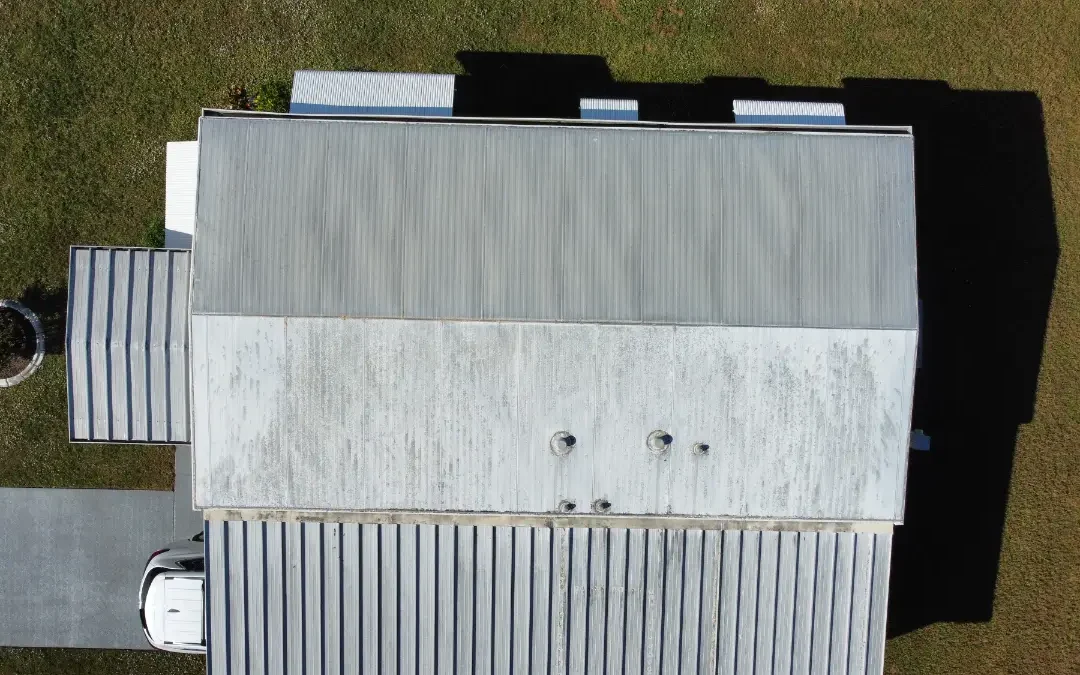
Metal roofing is often considered one of the more suitable roofing materials for rainwater collection.
One reason is that metal roofs typically have smooth surfaces that allow rainwater to flow quickly into gutters and collection systems. They also tend to accumulate less organic material than some other roofing surfaces.
For this reason, metal roofs are commonly used in residential, agricultural, and commercial rainwater harvesting systems.
However, maintenance still matters. Dirt, pollen, bird droppings, leaves, and debris can accumulate on metal roofs just as they can on any other roofing material. The condition of protective coatings, fasteners, gutters, and flashing should also be considered.
Asphalt shingle roofs
Asphalt shingles are among the most common residential roofing materials in Pennsylvania, which naturally leads many homeowners to wonder whether they can collect rainwater from a shingle roof.
The answer is often yes, but there are additional considerations compared to some other roofing materials.
As shingles age, they may shed granules and other materials into roof runoff. The condition and age of the roof can therefore play an important role in determining water quality.
This doesn’t necessarily prevent rainwater collection, but it may influence how you use the water and what filtration or treatment measures are appropriate.
For homeowners who intend to use collected water around edible plants or for household purposes, it’s worth carefully evaluating the roofing material, collection system, and intended use of the water.
Slate and tile roofs
Slate and tile roofs are generally durable roofing systems that can provide long service lives.
Like other roofing materials, however, they still require maintenance. Organic debris, moss, algae, dust, and other contaminants can accumulate on the roof surface and affect runoff quality.
The roof material itself is only one factor. The overall condition of the roof and collection system often has a greater influence on water quality than the roofing material alone.
Commercial roofing systems
Commercial buildings may use a variety of roofing materials, including:
- TPO membranes
- EPDM membranes
- Modified bitumen systems
- Metal roofing
- Roof coating systems
- Other low-slope roofing assemblies
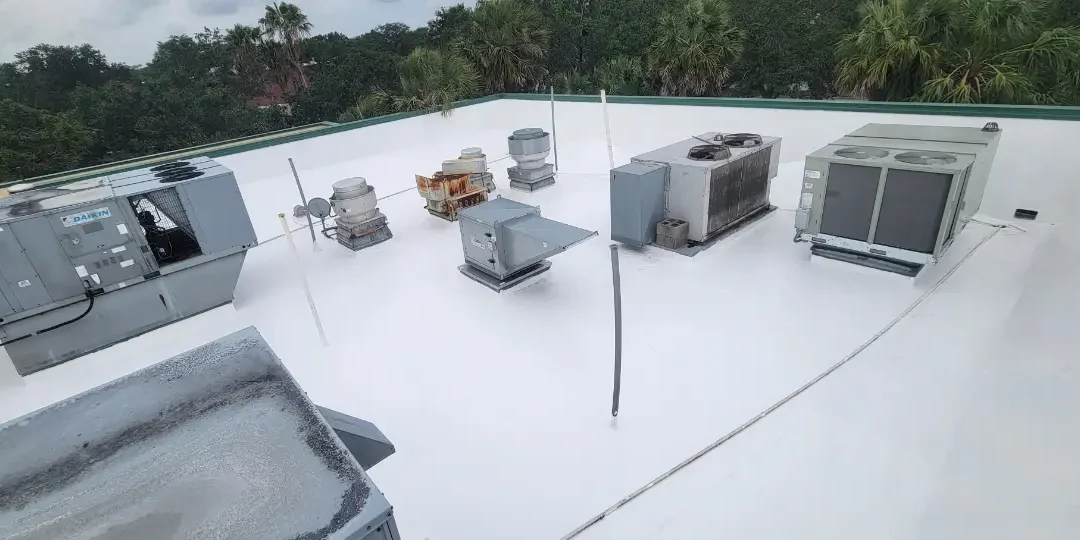
Because commercial roofs often have larger surface areas and more rooftop equipment, there may be additional factors to consider when collecting rainwater.
HVAC equipment, vents, drains, maintenance traffic, and the age of the roofing system can all influence the quality of roof runoff.
For this reason, commercial rainwater harvesting projects typically benefit from a holistic review of both the roof and the collection system before implementation.
What about coated roofs?
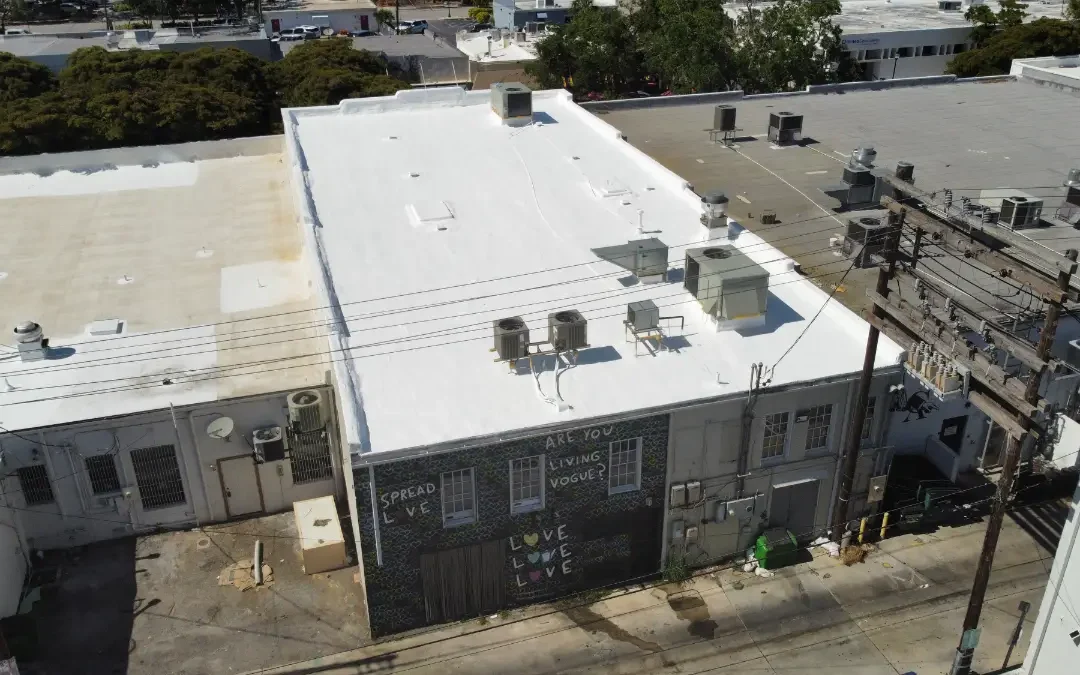
A coated roof isn’t a completely separate category from the roofing materials discussed above. In most cases, a roof coating is applied to an existing roofing system such as a metal roof, single-ply membrane, modified bitumen roof, or other commercial roofing assembly. The coating will prevent a lot of transfer from the roofing material to the collected rainwater, but if it gets damaged, that protection is reduced.
As a result, the suitability of rainwater collection depends not only on the coating itself, but also on:
- The underlying roofing material
- The specific coating product used
- Whether the coating has fully cured
- The condition of the roof
- The intended use of the collected water
- The design and maintenance of the collection system
This is why broad statements such as “all coated roofs are safe for rainwater collection” or “coated roofs should never be used for rainwater harvesting” are usually too simplistic.
The more useful question is whether a particular coating is appropriate for a particular collection system and intended use.
That brings us to one of the most important considerations in any rainwater harvesting project: choosing a roof coating that aligns with how the collected water will be used and understanding what certifications or product information may be relevant before work begins.
What to ask before coating a roof used for rainwater collection
If your roof already supplies water to a rainwater tank, or if you’re planning to install a collection system in the future, it’s worth discussing rainwater harvesting before any roof coating project begins.
The right coating for one property may not be the right coating for another, particularly when the collected water will be used for edible gardens, livestock, household applications, or other purposes where water quality is especially important.
Rather than focusing on a single yes-or-no question, it’s often more helpful to work through a series of practical considerations.
How will the collected water be used?
As you’re no doubt coming to realize, if you haven’t just skipped straight to this part of the article, this is the most important question of all.
A coating that may be entirely appropriate for water used to irrigate ornamental gardens may require additional consideration if the water will be used for:
- Fruit trees
- Vegetable gardens
- Livestock
- Washing produce
- Household use
- Drinking water systems
The intended use of the water should guide decisions about roofing materials, coatings, collection systems, filtration, treatment, and ongoing testing.
Is the coating suitable for the intended application?
Not all roof coatings are designed for the same purpose.
Different coating technologies use different ingredients, formulations, and performance characteristics. Product documentation may provide information about intended uses, certifications, curing requirements, and other considerations relevant to rainwater collection.
Before selecting a coating, it’s worth reviewing the manufacturer’s guidance and discussing any rainwater harvesting plans with the roofing contractor.
Has the coating fully cured?
The curing period is often overlooked when discussing rainwater harvesting.
Freshly applied roof coatings may require time to cure before they achieve their intended performance characteristics. The manufacturer’s guidance should always be followed regarding curing times and exposure conditions.
Property owners who collect rainwater should discuss whether any precautions are recommended during or immediately after the coating installation process.
Does the collection system include filtration and first-flush diversion?
Even if the roof coating itself is appropriate, water quality can still be affected by debris, dust, pollen, bird droppings, insects, and other contaminants that accumulate on the roof.
This is why many rainwater harvesting systems incorporate:
- Leaf screens
- First-flush diverters
- Sediment filters
- Additional filtration equipment
- Water treatment systems where appropriate
A well-designed collection system often plays a major role in maintaining water quality.
How will the system be maintained?
Rainwater harvesting isn’t a set-and-forget system.
Ongoing maintenance may include:
- Roof inspections
- Gutter cleaning
- Filter maintenance
- First-flush maintenance
- Tank inspections
- Water testing where appropriate
Even the most suitable roofing materials and coatings can become part of a poor-performing collection system if maintenance is neglected.
Should the water be tested?
If collected rainwater may be used for household purposes, drinking, food preparation, or other sensitive applications, testing may be worth considering.
Testing can provide information about the quality of the water being collected and help identify issues that may not be visible during routine inspections.
The CDC recommends testing rainwater systems used for drinking water for germs and chemicals on a regular basis.
The need for testing will depend on factors such as the intended use of the water, local regulations, system design, and individual risk tolerance.
Why planning ahead usually delivers the best outcome
One of the easiest times to think about rainwater harvesting is before a coating project begins.
When roofing goals and rainwater collection goals are considered together, it’s often easier to select appropriate materials, design the collection system properly, and avoid costly modifications later.
This approach helps ensure the roof, coating, gutters, filtration systems, and intended water uses all work together as part of a single system.
The good news is that many coated roofs successfully coexist with rainwater harvesting systems. The key is understanding the intended use of the water and making informed decisions before the project starts rather than trying to solve potential issues afterwards.
Are some roof coatings better for rainwater harvesting than others?
One of the most common follow-up questions property owners ask is whether certain roof coatings are better suited to rainwater collection than others.
The answer isn’t always straightforward.
Different roof coatings are designed to solve different roofing challenges, and the suitability of a coating for a rainwater harvesting system depends on factors such as the intended use of the water, the roofing system involved, the manufacturer’s guidance, applicable certifications, and the overall design of the collection system.
For this reason, it’s generally best to avoid broad assumptions about entire categories of roof coatings.
Different coating technologies have different characteristics
Modern roof coatings can include technologies such as:
- Acrylic coatings
- Silicone coatings
- Polyurethane coatings
- Asphalt-based coatings
- Other specialised roofing systems
Each coating type has its own performance characteristics, including differences in weather resistance, durability, reflectivity, flexibility, maintenance requirements, and application methods.
While these characteristics may influence roofing performance, they do not automatically determine whether collected rainwater is suitable for a particular use.
Product-specific information matters more than coating type alone
Two coatings that fall within the same broad category may have very different formulations.
This is why roofing professionals typically look beyond general coating categories and review information relating to the specific product being considered.
Depending on the application, relevant information may include:
- Manufacturer specifications
- Installation requirements
- Curing recommendations
- Product testing information
- Regulatory requirements
- Certifications relevant to water contact, where applicable
When rainwater harvesting is part of the project, these details can be just as important as the coating technology itself.
Certifications may be relevant for some applications
For property owners who intend to use collected rainwater for household or potable purposes, certifications and testing standards may become particularly important.
Certain products may be tested or certified for specific water-contact applications, while others may not be intended for those uses.
Because certification requirements vary depending on how the water will be used, it’s important to evaluate the specific product and intended application rather than relying on general assumptions about roof coatings as a whole.
The coating is only one part of the system
Remember, even when a coating is selected carefully, it remains only one component within a larger rainwater harvesting system.
Water quality can still be influenced by:
- The underlying roofing material
- Flashing and sealants
- Gutters and downspouts
- Debris accumulation
- Filtration systems
- Storage tanks
- Ongoing maintenance practices
This is another reason there’s rarely a single coating that can be described as universally “best” for rainwater harvesting.
The most appropriate solution depends on the entire system and the intended use of the collected water.
Why professional guidance can be valuable
When rainwater harvesting and roof coatings are both priorities, discussing both goals before work begins can help avoid surprises later.
A roofing contractor can help evaluate:
- The condition of the existing roof
- Suitable coating options
- The intended use of the collected water
- Collection-system considerations
- Long-term maintenance requirements
This allows roofing performance and rainwater harvesting goals to be considered together rather than as separate projects.
For many property owners, the result is a roofing system that provides the benefits of a roof coating while also supporting their rainwater collection objectives.
A coated roof and rainwater harvesting can often work together
So, do roof coatings impact captured rainwater?
Yes, they can. However, the presence of a roof coating does not automatically mean rainwater collection is unsafe, nor does it automatically mean the water is suitable for every possible use.
The practical answer depends on the coating, the roof material, the collection system, maintenance practices, and how the water will be used.
For some properties, captured rainwater may be used primarily for landscape irrigation or other outdoor applications. For others, the water may be used around edible plants, livestock, or household systems. Each of these uses requires a different level of consideration.
The most important takeaway is that the intended use of the water should guide decisions about the roofing system.
A roof coating project should not be viewed in isolation. Instead, the roof, coating, gutters, filters, storage tanks, and water-use goals should be considered together as parts of a single rainwater harvesting system.
When these factors are planned thoughtfully, many property owners are able to enjoy the benefits of both a high-performing roof coating system and an effective rainwater collection system.
Talk to your roofing contractor before work begins
If you currently collect rainwater or plan to install a rainwater harvesting system in the future, make sure that goal is part of the conversation before any roofing work begins.
Discussing rainwater collection early can help ensure that:
- The intended use of the water is understood
- Appropriate roofing materials are selected
- Suitable roof coating options are considered
- Collection-system requirements are identified
- Long-term maintenance expectations are clear
Planning ahead is usually far easier than making changes after a coating has already been installed.
Need advice about a roof coating project?
Whether you’re considering a roof coating for your home, agricultural building, or commercial property, Lester’s Roofing & Carpentry can help you evaluate your options and understand how a roof coating may fit with your long-term goals. Get in touch to discuss your roofing project or request a quote.
The best roofing decisions are informed ones, and when rainwater harvesting is part of the equation, a little planning can go a long way toward protecting both your roof and your water supply.